
What is a dual-spindle CNC lathe? How does it work, and what are its advantages?
I -Introduction: A dual-spindle CNC lathe is a type of CNC lathe equipped with two independent spindles, capable of simultaneously or sequentially machining both ends of a workpiece or performing multiple operations. Its core advantages are improved efficiency and ensured precision.
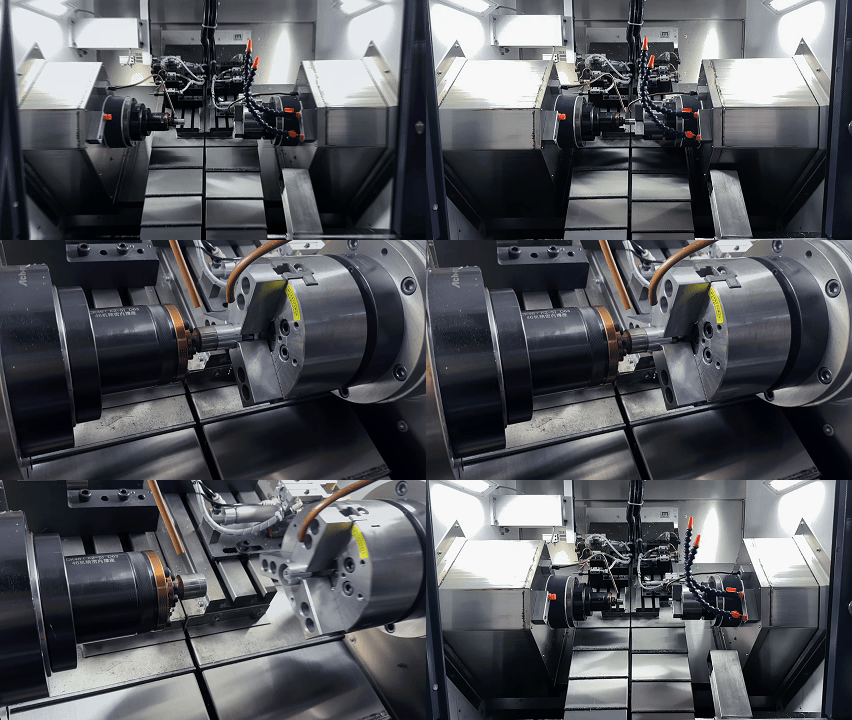
- A dual-spindle CNC lathe is equipped with two parallel spindles, referred to as the main spindle and the sub-spindle.
- These two spindles can move independently or work in coordination to perform multi-process machining on both ends of a workpiece or on the same end.
- It is often paired with components such as turrets and powered tool holders, making it suitable for complex workpieces like shafts and discs that require multi-sided and front-and-back machining.
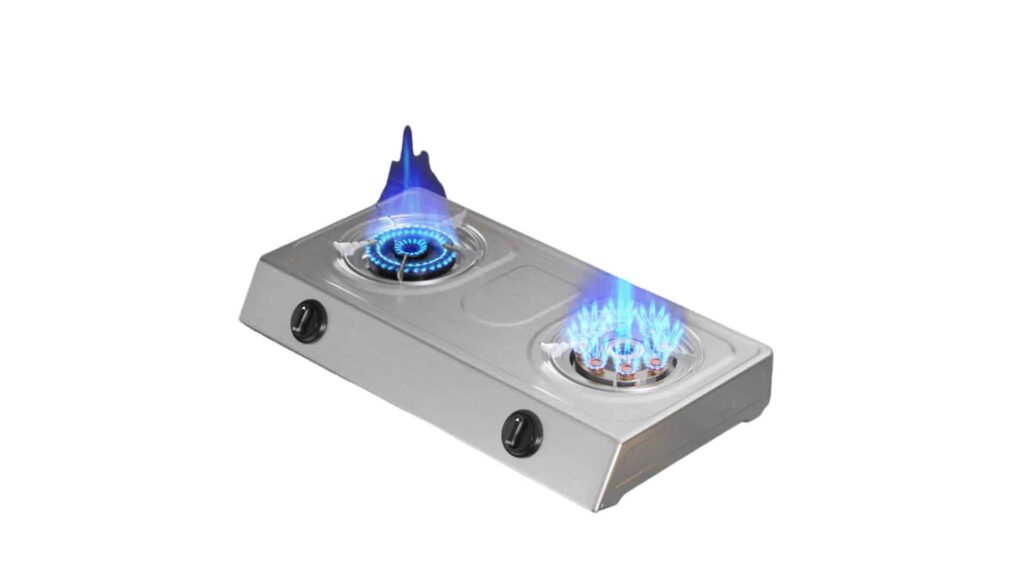
- Traditional single-spindle lathe: Like a kitchen with only one burner — you have to wait for one dish to be finished before you can start the next.
- Dual-spindle lathe: Like a kitchen with two side-by-side burners — two chefs (the two spindles) can work at the same time, or one can handle pre-processing while the other takes care of finishing, greatly improving efficiency.
- The two spindles are typically arranged face-to-face along a straight line.
- The first spindle (main spindle) is responsible for machining the right end of the workpiece.
- Once the machining on that end is completed, the second spindle (sub-spindle) moves into position to take over the workpiece.
- Then, the second spindle performs machining on the other end of the workpiece (the end that was previously held by the first spindle).
- This process allows all (or most) of the machining operations for a single part to be completed in just one clamping, realizing the manufacturing concept of “Done-in-One” — completing the entire process with a single setup.


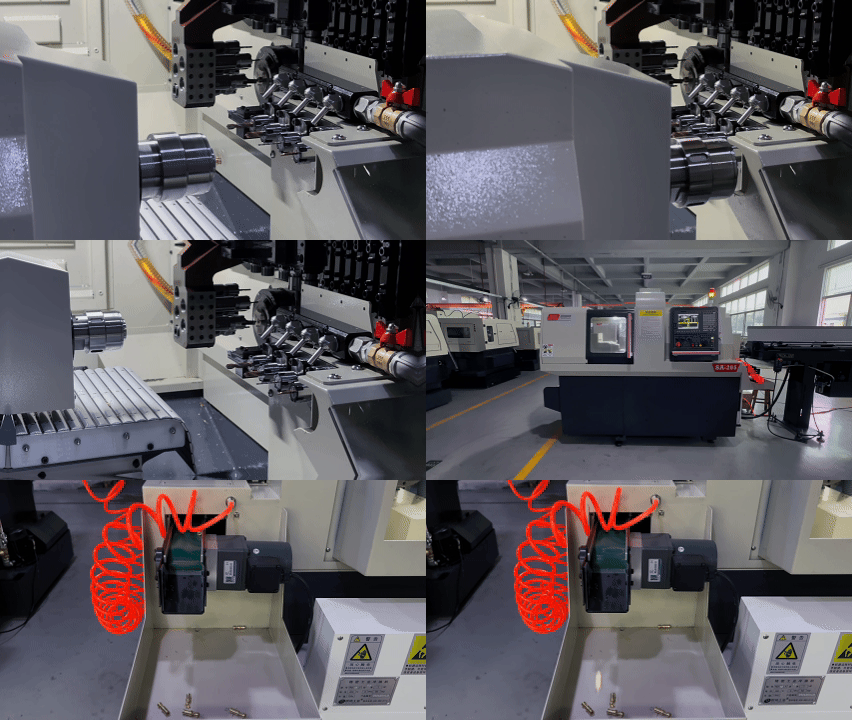
- The arrangement of the spindles is generally either parallel or symmetrical.
- In this setup, the sub-spindle can move along both the X-axis and Z-axis, making post-machining ejection simpler — the finished part can be directly moved to a parts chute, blown out, and then conveyed away via a synchronized belt. The back-and-forth movement of the sub-spindle along the X-axis also supports more complex machining operations.
- This structure is commonly used in Swiss-type automatic lathes. In this design, the spindle head moves while the cutting tools remain stationary, which results in faster machining speeds, reduced tool vibration, higher precision when machining long, slender parts, and a higher level of automation and intelligence.

- In this setup, the sub-spindle can only move back and forth along the Z-axis. Once it moves to the designated position, the cutting tool moves toward the material to begin the machining process.
- This structure is suitable for simple shaft-type parts, but it cannot meet the machining requirements for complex operations such as cutting special-shaped grooves on the side or eccentric circles.
- While this configuration achieves higher concentricity between the main and sub-spindles, the limited mobility of the sub-spindle means that ejecting the finished product requires the assistance of a mechanical swing arm.
- The swing arm catches the part and then swings it back. However, due to the high number of repeated movements, the swing arm is prone to metal fatigue and jamming, and may collide with the spindle or cutting tools, leading to a higher failure rate and expensive maintenance costs.
- This type of structure is commonly used in dual-spindle gang type lathes.
II. What Is the Fundamental Difference Between a Dual-Spindle and a Single-Spindle Lathe?
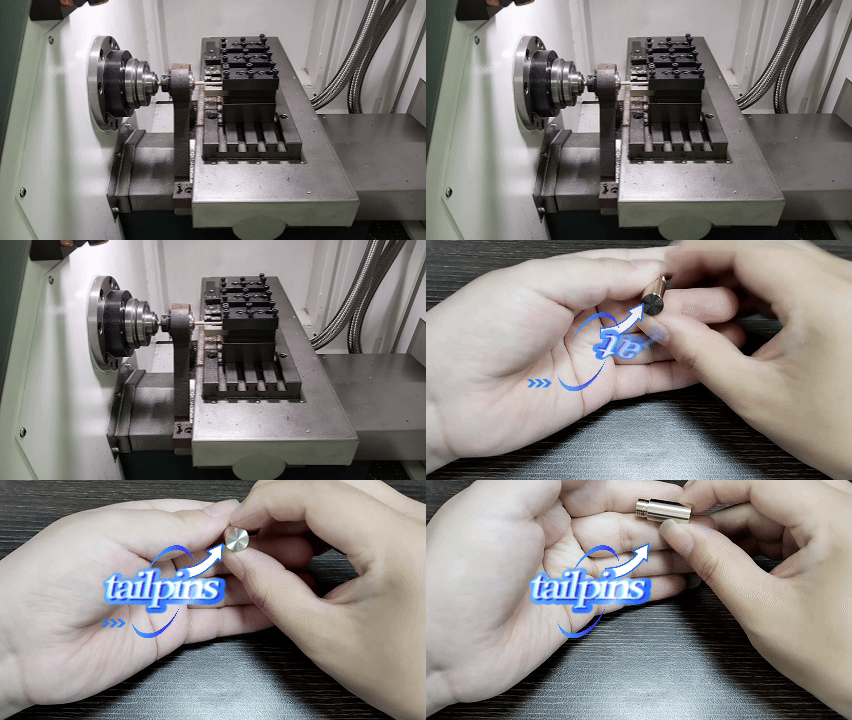
Process:
- Clamp the workpiece → Machine Side A → Unload the workpiece → (Manually reorient the part) → Re-clamp the workpiece → Machine Side B → Unload the workpiece.
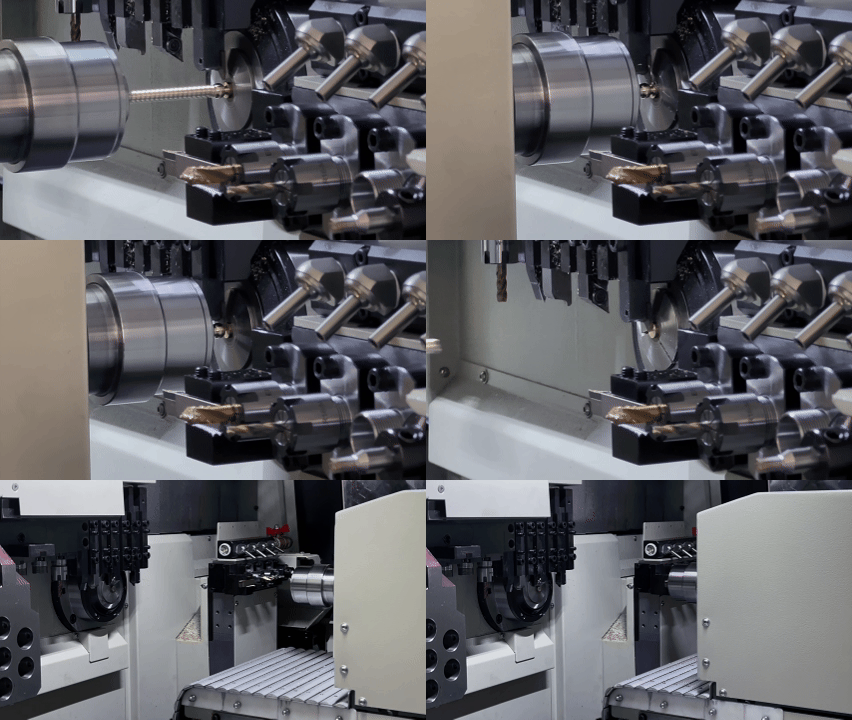
- Clamp the workpiece on the main spindle → Machine Side A → The sub-spindle moves in to take over the workpiece → Machine Side B → Unload the fully machined part.
Advantage:
- It enables all turning operations to be completed in a single clamping, improving both efficiency and precision.When the workpiece is cut off, the sub-spindle engages to clamp it, which helps maintain a high surface finish on the cut end face and prevents the formation of tailpins.
III. Clear Differences in the Advantages and Disadvantages Between Dual-Spindle and Single-Spindle CNC Lathes
| Item | Single – spindle Machine Tool | VS | dual Spindle Machine Tools |
| Number of spindles | 1 | – | 2 |
| Type of spindles | Mechanical Spindle | – | Electric Spindles |
| Processing efficiency | Secondary clamping is time – consuming, and only one semi – finished product can be produced in one cycle. | < | Seamless connection reduces idle waiting time. One cycle can produce one finished product. |
| Machining accuracy | Secondary clamping will inevitably produce repeated positioning errors, affecting concentricity, perpendicularity, etc. | < | Single – clamping, with a unified reference, eliminates secondary clamping errors.Especially suitable for positive and negative parts with high – precision requirements. |
| Degree of automation | To achieve complete machining, it is necessary to equip with robots or manipulators for workpiece turning and transfer, making the system complex. | < | The workpiece is automatically transferred inside the machine tool. Only a simple loading and unloading device is required to form an efficient automated unit. The workpiece is automatically transferred inside the machine tool. Only a simple loading and unloading device is required to form an efficient automated unit. |
| Complex part processing | For complex – structured parts (such as parts with inner cavities and threads at both ends), machining is difficult or even impossible. | < | Various tool modules can be installed on both spindles to meet diversified machining needs and complete them in one machining cycle. |
| Difficulty of operation | Single – channel system, simple operation. | < | Multi – channel system, requiring more technically – skilled personnel. |
| Equipment cost | Simple structure, low initial investment, but double the number of equipment is needed to meet production requirements. | < | The cost of a single machine is higher, but the comprehensive operating cost is lower than that of two single – spindle machines. |
| Floor – space cost | For the same output, double the number of equipment is required, and the total floor area is larger when adding automation and other configurations. | < | The footprint of a double – spindle machine is smaller than that of two single – spindle machines. |
| Energy consumption cost | Higher (cost). | < | Low (presumably referring to some cost or resource consumption) |
| Scope of application | Products without secondary machining for simple processes. | < | Suitable for various complex types of products |
| Machine – tool type | Gang tool lathe, turret lathe, cam automatic lathe. | – | Swiss type cnc lathe, dual Spindle gang type cnc lathes, dual turret CNC lathes |
IV. How to Make the Most Suitable Choice Between a Dual-Spindle CNC Lathe and a Single-Spindle CNC Lathe?
This is a very critical decision-making issue. Choosing between a dual-spindle and a single-spindle lathe essentially involves making a trade-off among investment cost, production efficiency, machining precision, and automation requirements.
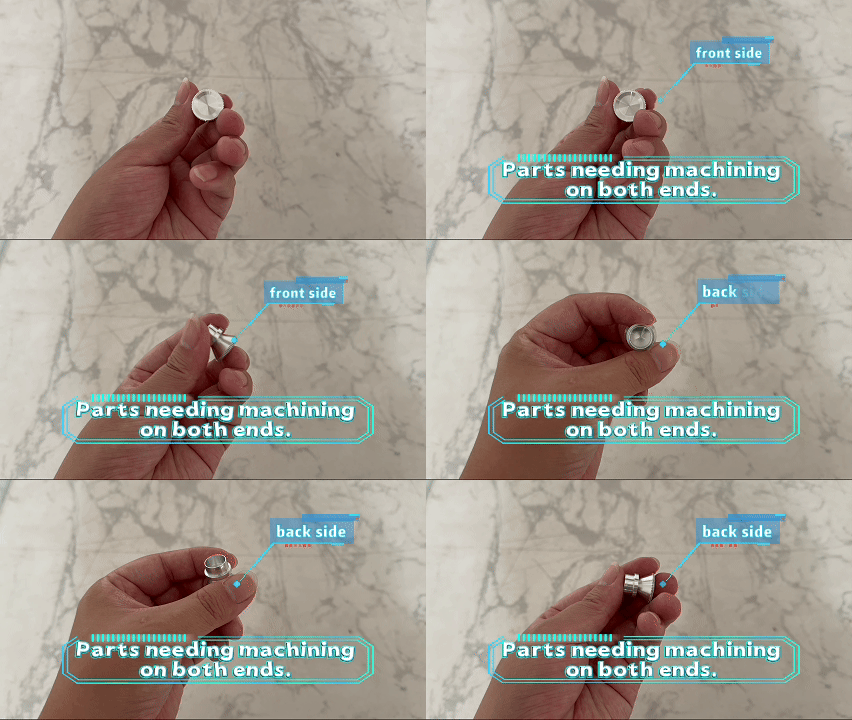
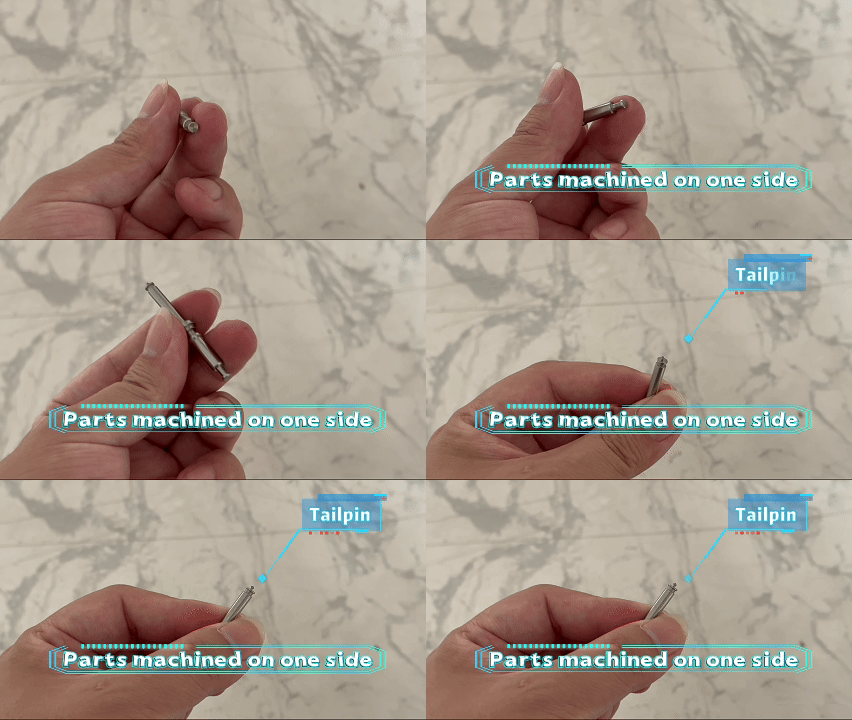
1. Considerations Based on the Workpiece Itself
✅ The workpiece requires high-precision “front-and-back” or “two-end” machining,The workpiece has a complex structure, making secondary clamping difficult or time-consuming.
- The two ends of the workpiece have strict requirements for coaxiality, positional accuracy, or the need for matching internal and external threads.
- Single-spindle machines inevitably produce repeat positioning errors during secondary clamping. A dual-spindle lathe completes all machining in a single clamping, with a unified reference, which can perfectly ensure the precision of features on both ends.
2. Considerations Based on Production Efficiency and Cost
✅ Pursuing Ultimate Efficiency in High-Volume Production,Aiming to Reduce the Cost Per Part
- The product has a long life cycle and requires continuous, high-volume production.
- A dual-spindle lathe combines two machining processes into one machine, reducing workpiece loading/unloading, transfer, and waiting times. Although the cycle time per piece may not be the shortest, the overall production takt time and output per operator are significantly improved.
- If your single-spindle lathe requires two clamping operations to finish one part, taking a total of 2 minutes, a dual-spindle lathe may complete the same part in just 1.2 minutes. Over time, this leads to a huge increase in production capacity.
- Although the initial investment in a dual-spindle lathe is higher, the resulting efficiency gains, labor savings, and reduction in scrap rate will significantly lower the processing cost per part. For high-volume production, the return on investment (ROI) can be very substantial.
- Building a “lights-out factory” or aiming to achieve minimally manned production.
- A dual-spindle lathe is a natural core component of an automated cell. It only requires a simple loader or robot to load and unload parts from one side of the machine, enabling the complete machining of a finished part. In contrast, a single-spindle lathe would require a more complex robot to flip the part and transfer it between machines.
4.Scenarios Where a Single-Spindle CNC Lathe Is Still Suitable (No Need to Consider a Dual-Spindle Lathe)
• Small-batch production (single batch < 100 pieces) with frequent changeovers, where the efficiency advantage of a dual-spindle lathe cannot be realized.
• Simple workpiece structures that only require single-face, single-process machining without complex precision requirements.
• Limited budget, where the investment in a dual-spindle machine (typically 1.5 to 3 times the cost of a single-spindle machine) exceeds production cost expectations.

👉 Thank you for reading!
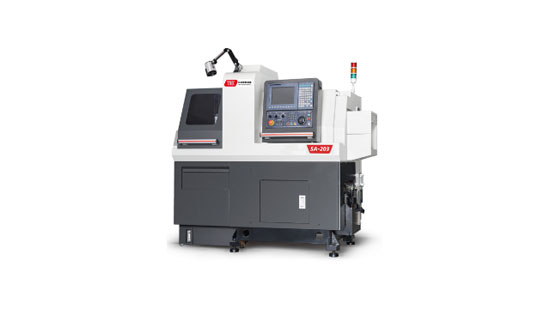
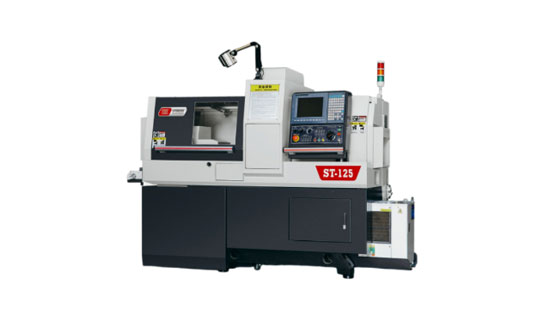
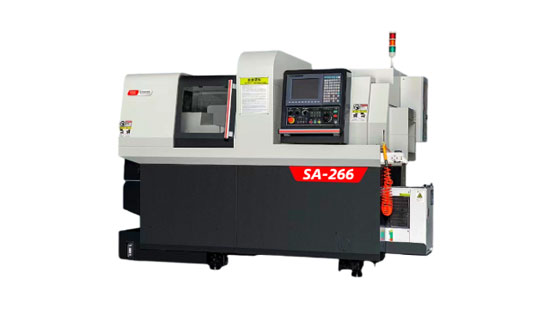
👉 Taike As a Swiss-type CNC machine tool manufacturer with 20 years of experience, we specialize in providing precision machining solutions.
👉 For your metal parts requiring machining evaluation, we offer:
✅ Free machining proposals
✅ Machining time estimation
✅ Prototype testing support
👉 Learn about our full range of CNC lathes and Swiss-type lathes now!
👉 Welcome to contact us!